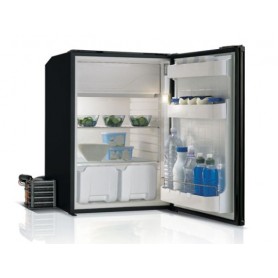
Available under demand
€566.28

Boat refrigerators allow you to keep food and drinks fresh on board with greater convenience, whether you're heading out for a day trip or a longer voyage. At Nautichandler, you'll find a range of marine refrigeration solutions designed to fit different spaces, electrical systems, and onboard needs.
There are 52 products.
Choosing a boat refrigerator involves more than simply comparing storage capacity. In a marine environment, factors such as power consumption, ventilation, installation type, and durability under constant humidity and movement all play an important role.
Before buying a refrigerator for your boat, it is worth reviewing the following points:
A marine refrigerator is specifically designed to meet the demands of life on board, where space, available power, and reliability are key considerations.
The ideal size depends on the available space and your intended use. For short trips, a compact refrigerator may be sufficient for drinks, snacks, and basic food items. For coastal cruising or multi-day stays, however, a larger refrigerator with a more versatile interior layout is generally the better choice.
As a general guide:
| Type of Use | Recommended Capacity | Recommendation |
|---|---|---|
| Day trips | 20–40 L | Portable coolers for drinks and basic food items |
| Weekend trips | 40–80 L | A balanced option for 2–4 people |
| Long cruises or extended stays | 80+ L | Greater autonomy and improved storage organization |
In addition to capacity, it is important to carefully measure the installation space. Check the width, height, depth, door opening direction, and the clearance required behind the unit for ventilation. With boat refrigerators, installing the unit in a space that is too tight can reduce performance, especially in hot weather or areas with poor airflow.
You should also consider whether you need refrigeration only or a freezer compartment as well. Some models include a small freezer section, which is useful for ice or certain frozen foods, although it may reduce the available refrigeration space.
On larger boats, there are also configurations that combine a refrigerator with a separate freezer to maximize storage capacity.
The power consumption of a boat refrigerator depends on several factors, including compressor technology, ambient temperature, insulation quality, how often the door is opened, the selected temperature, and the unit's ventilation. For this reason, it is more useful to consider actual energy consumption during operation than simply looking at the rated power.
Most boat refrigerators operate in cycles: the compressor does not run continuously but switches on only when needed to restore the internal temperature. If the refrigerator is opened frequently, filled with warm food, or exposed to direct sunlight, energy consumption may increase.
To optimize performance:
Properly sized boat refrigerators provide greater comfort and autonomy, especially when paired with an electrical system designed to handle the expected load. Before choosing a boat refrigerator, review the manufacturer's specifications and ensure it is compatible with both your electrical system and your boating needs.
At Nautichandler, you can explore a selection of marine refrigerators and refrigeration solutions available in a variety of sizes and configurations. Shop online with ease, and if you need advice, our team will be happy to help you choose the most suitable model for your installation.