Available under demand
€25.51
€31.89

Abrasive brushes are very practical tools for cleaning, removing oxidation, dulling, and preparing surfaces during boat maintenance. In the marine sector, they are especially useful in hard-to-reach areas, textured parts, or corners where other solutions cannot reach as easily.
There are 58 products.
Manual abrasive brushes are designed for more controlled work, localized touch-ups, and delicate or small surfaces. They are a good option when you need to better control pressure, work with precision, or access narrow areas without the risk of removing too much material. On board, this is useful around fitting bases, cockpit corners, metal brackets, latches, rails, or areas close to joints and sensitive finishes.
Drill-mounted models, on the other hand, allow you to work faster on cleaning or preparation tasks over larger surfaces or areas with more stubborn dirt. They are commonly used for removing surface oxidation, cleaning metal parts, or preparing areas before priming or repainting. Their main advantage is speed, but they require greater control to avoid excessively damaging the surface. In both cases, it is advisable to choose the format according to the available space, the material, and the required level of abrasion.
To use abrasive brushes correctly, the first step is to identify the material and the type of work: cleaning stainless steel with light marks is not the same as removing rust from a metal strip or preparing a painted area before refinishing. It is always worth starting with a moderate level of abrasion and increasing it only if necessary. This reduces the risk of leaving deep marks or causing excessive wear.
With manual models, it is advisable to work with even strokes and without applying excessive pressure. With drill-mounted brushes, it is important to maintain a controlled speed and avoid focusing too long on the same spot to prevent overheating or uneven wear. Before starting, the surface should be free from salt, dust, and grease, as these residues can worsen the final result.
After the work is completed, it is recommended to thoroughly remove any loosened residue and check whether the part requires further protection, such as primer, paint, lubrication, or anti-corrosion treatment. In marine environments, this step is essential to ensure that the cleaning or preparation lasts over time.
The most suitable abrasive brushes depend greatly on the area of application. For fittings, screws, stainless steel brackets, or small metal parts, compact and narrow-profile formats usually work best because they allow easier access to joints, corners, and irregular shapes. On flat surfaces or larger parts, a brush with a wider contact area helps speed up the work.
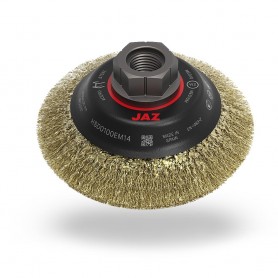
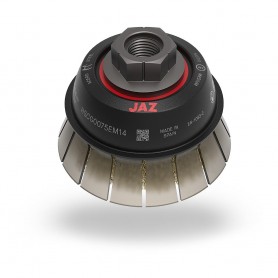
There are also different formats, such as cup, wheel, circular, or flap brushes, which are better suited to flat surfaces, interiors, edges, or more uniform material removal work.
In technical compartments or tight spaces, a manageable and easy-to-direct model is preferable. In exterior areas exposed to salt, such as stanchion bases, brackets, pulleys, or mooring points, the priority is usually to remove surface corrosion or ingrained dirt without damaging the surrounding area. For delicate parts or visible finishes, it is better to choose a softer abrasion level and always test the result on a less visible area before continuing.
Within abrasive brushes, there are different levels of abrasiveness, ranging from soft options for cleaning and light dulling to more aggressive versions for heavy cleaning and removing corrosion or aged coatings. Fine models are suitable for general maintenance, touch-ups on delicate surfaces, or tasks where preserving the finish is important. Medium-abrasion brushes provide a good balance for technical cleaning and preparation before painting. The harshest versions are reserved for more demanding work on metal or visibly deteriorated parts.
The brush material also plays a role: synthetic fibers with integrated abrasive, abrasive nylon, and other compositions designed to provide different levels of flexibility, wear resistance, and compatibility with various surfaces. Choosing the right one avoids unnecessary rework and helps ensure safer, more efficient maintenance.