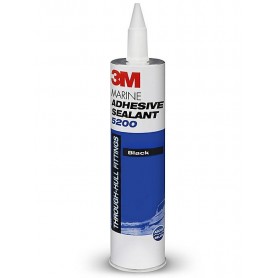
€40.25
€50.31

A marine adhesive is designed to bond, secure, or seal parts on a boat while withstanding moisture, vibrations, salt residue, and temperature changes. Unlike a conventional adhesive, a marine adhesive must provide a stable bond on materials exposed to a far more demanding environment, whether for small assemblies, repairs, or onboard maintenance tasks.
This broad category also includes sealants, technical glues, adhesives specifically formulated for inflatables or PVC, as well as cleaners, activators, and application accessories that help prepare the bond more effectively.
There are 125 products.
A good marine adhesive must combine adhesion, elasticity, and environmental resistance. On a boat, many joints are not only subjected to load: they also endure movement, expansion, impacts, and continuous exposure to water, UV rays, and salty atmospheres. That is why one of the key factors is that the product maintains its properties over time without becoming brittle or peeling away easily.
Among the most common options are polyurethane adhesives, epoxies, and hybrid adhesives or technical sealants. Polyurethane stands out for its elasticity and its excellent performance on joints, accessories, and installations exposed to vibration. A marine adhesive-sealant can be especially useful when both bonding and sealing are required at the same time, which is very practical for decks, portholes, bases, or small installation components. For work on composite materials, it is also important to consider a fiberglass boat adhesive compatible with gelcoat, laminates, and composite surfaces.
The best marine adhesive for accessories, fittings, and small fixings depends on the material, the load the part will support, and whether the bond needs to remain rigid or slightly flexible. For lightweight accessories or interior fixings, a technical adhesive with clean application and good initial grip may be enough. For fittings, supports, or installations exposed to vibration, a solution with greater elasticity and good mechanical resistance is usually preferable.
When the part is installed on fiberglass, aluminum, stainless steel, or varnished wood, adhesive compatibility is essential. Not all products adhere equally well to smooth, porous, or painted surfaces. In many cases, a marine adhesive-sealant is very practical because it helps secure the part while also improving watertightness. If the area is exposed to splashes, frequent mooring, maneuvers, or continuous movement, it is advisable to prioritize a product specifically formulated for marine environments. In other cases, such as repairs on inflatables, PVC, pipes, or threaded joints, it is better to use products specifically designed for each material or system.
The format of a marine adhesive greatly influences ease of use and application precision. Cartridges are very common for assembly, sealing, or bonding work on medium and large surfaces, as they allow uniform application with a caulking gun. Small tubes are practical for occasional repairs, lightweight fixings, or maintenance tasks where only a small amount of product is needed.
There are also two-component formats for more technical work, where an especially strong bond or a more structural repair is required. In these cases, correct mixing is essential to achieve the expected result. If you are working in a confined space or hard-to-reach areas, a manageable container with precise dispensing will help you apply the product more cleanly and accurately.
For a marine adhesive to work properly, surface preparation is almost as important as the product itself. Before application, it is advisable to thoroughly clean, degrease, and dry the area. On materials such as fiberglass, metal, or wood, light sanding can improve adhesion if recommended by the manufacturer. On a boat, this step is especially important because salt residue, moisture, and dirt significantly reduce adhesion.
Then, apply the appropriate amount without excess and respect the fixing and curing times. A joint subjected to load, tension, or vibration too early may lose effectiveness. For accessories, fittings, or small fixings, it is also advisable to ensure the part is correctly positioned from the start, as some adhesives allow very little adjustment once placed.