In Stock
€25.16
€29.60

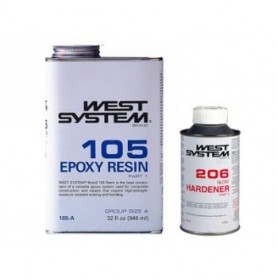
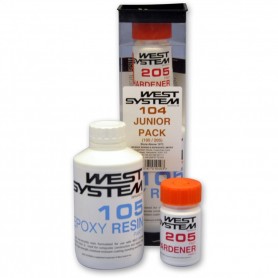
The West System resin is an epoxy solution widely used in marine applications for repairing, bonding, laminating, and reinforcing different parts of a boat, together with hardeners, fillers, and kits that allow the mixture to be adapted to each specific job.
There are 19 products.
Its versatility and strength make it a very practical option for maintenance work that requires a durable bond in environments exposed to moisture, salt, and mechanical stress.
West System resin is an epoxy system made up of a base resin and a hardener that, when mixed in the correct ratio, create a material with excellent adhesion and strength. In marine applications, it is used to repair fiberglass, bond wood, reinforce laminates, seal damaged areas, or rebuild small volumes with the help of fillers and additives.
One of its main advantages on board is its adaptability to very different types of work. It can be used for structural repairs, bonding load-bearing parts, or filling an area before sanding and finishing. Within the West System range, it is common to find different hardeners depending on the required working time, as well as fillers to thicken the mixture and turn it into an adhesive or filler compound.
This makes it possible to choose the product according to the actual task: repairing an inspection hatch, reinforcing part of the hull, working on interior wood, or rebuilding a part damaged by moisture all require different approaches. There are also different container sizes available, useful for both small repairs and more extensive maintenance work.
West System resin performs very well on wood, fiberglass, laminates, and other common boatbuilding materials. On wood, it stands out for its excellent adhesion and consolidating properties, making it very useful for repairs to interiors, bulkheads, panels, or auxiliary parts. On fiberglass and composites, it can repair cracks, reinforce weakened areas, and rebuild minor damage with strong final resistance.
It can also be used on certain metal surfaces and other rigid substrates, provided the preparation is correct and the application is compatible with the material. In all cases, the result depends heavily on the condition of the surface: it should be clean, dry, sanded when necessary, and free of grease or salt residue.
In marine environments, where materials are constantly exposed to humidity, temperature changes, and vibrations, a properly applied epoxy system helps achieve a more stable and durable repair than less technical alternatives.
For West System resin to perform properly, it is essential to respect the correct mixing ratio between resin and hardener. Incorrect dosing can affect curing, reduce strength, or leave the surface sticky. For this reason, it is important to always follow the manufacturer’s instructions and use compatible dispensing pumps if available.
Before application, the surface must be properly prepared. Cleaning, degreasing, and sanding when necessary greatly improve adhesion. Once mixed, the product can be used as-is for coating or laminating, or thickened with fillers to create a putty or denser adhesive. Lighter fillers make sanding easier, while structural fillers provide more body and strength.
For on-board work, especially in confined spaces, it is advisable to prepare only the amount that will be used immediately. Ambient temperature should also be considered, as it affects working time and curing. Applying the product methodically and respecting curing times between layers significantly improves the final result.
West System resin differs from other epoxy systems thanks to its modular approach and the wide variety of possible combinations between resin, hardeners, and fillers. This allows the mixture to be better adapted to the type of repair, the available working time, and the desired finish.
Compared to more generic epoxy products, it usually offers greater control in bonding, filling, laminating, and reconstruction work. On a boat, this is especially important because a single repair may require adhesion, mechanical strength, and sanding ease at different stages.